Kriib
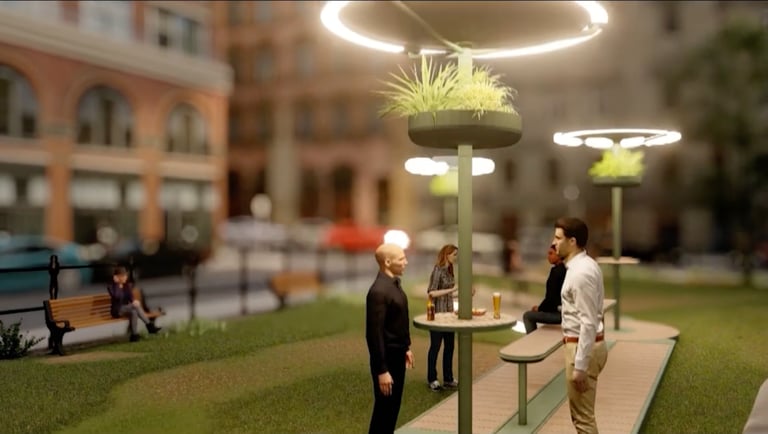
Kriib is a modular, energy-autonomous lighting system designed to reclaim lost urban spaces, and turn them into places people actually want to be. The concept started with a simple image: a fireplace. A source of warmth and light that draws people together, close enough to share a moment, spaced enough to feel comfortable. We were designing during the pandemic: the balance between togetherness and distance felt especially relevant.
Industrial Designer
3x Industrial Designers
15 weeks
Role
Team
Duration
Awards
Lambert & Fils innovation prize
01
Process
Background
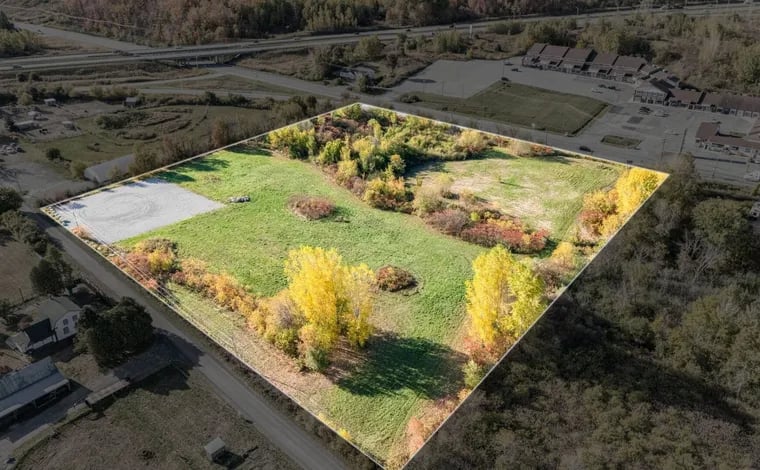
Montreal is a beautiful city, but it has no shortage of wastelands. Vacant lots scattered throughout the island, totaling the equivalent of four American football fields. These spaces sit empty for various reasons: soil decontamination, zoning disputes, or simply a lack of appeal for development. They pass from private neglect to municipal indifference. In the meantime, they collect filth, and feel unsafe for citizens. Bringing these spaces back to life, whether permanently or temporarily, has a huge potential impact on the cityscape, which we saw an opportunity in.
Energy
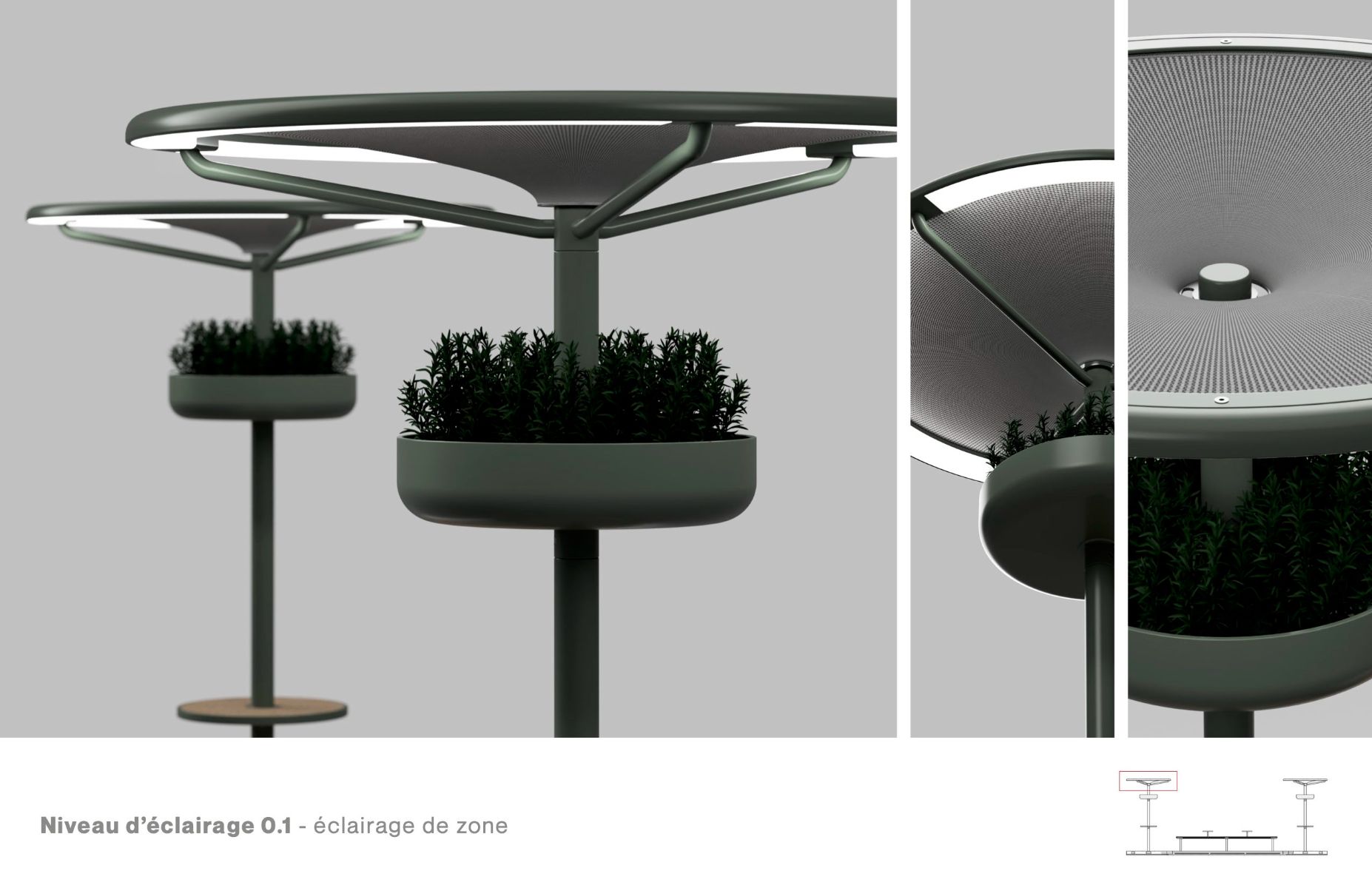
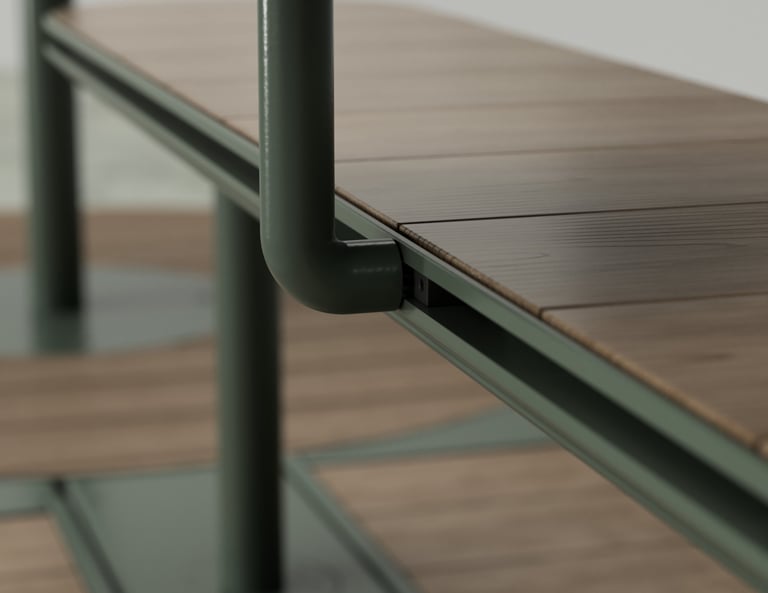
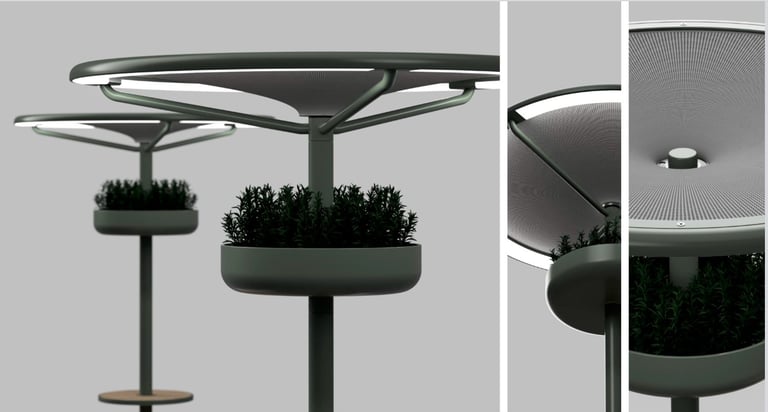
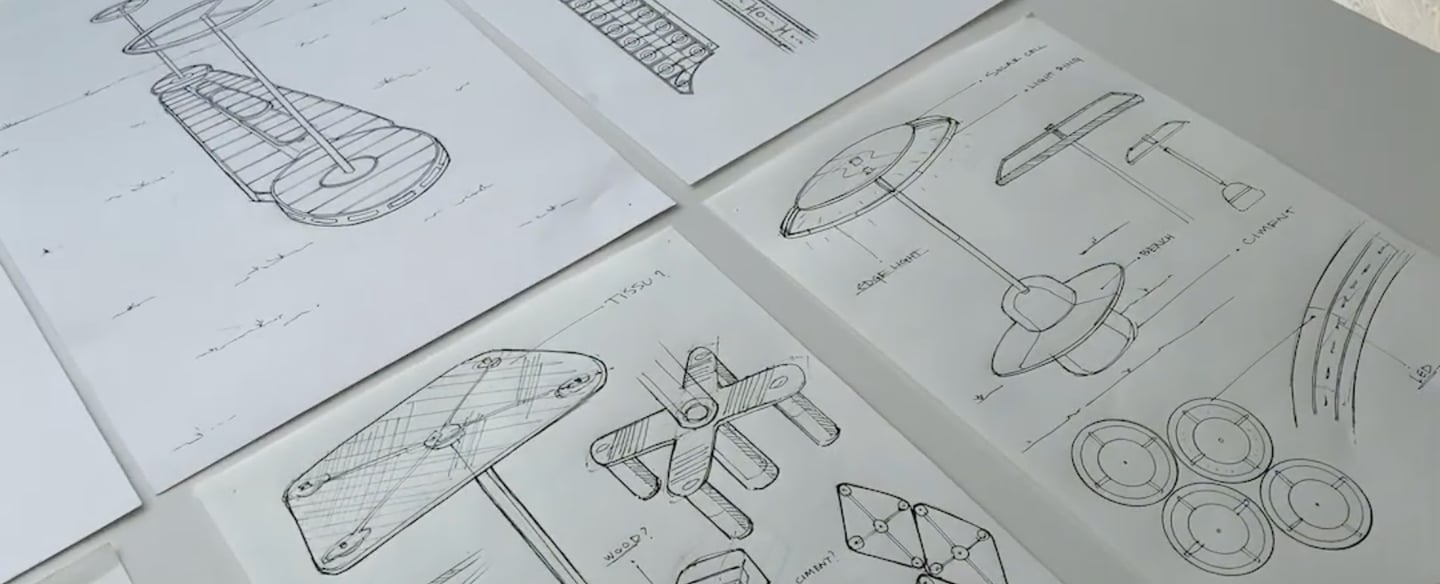
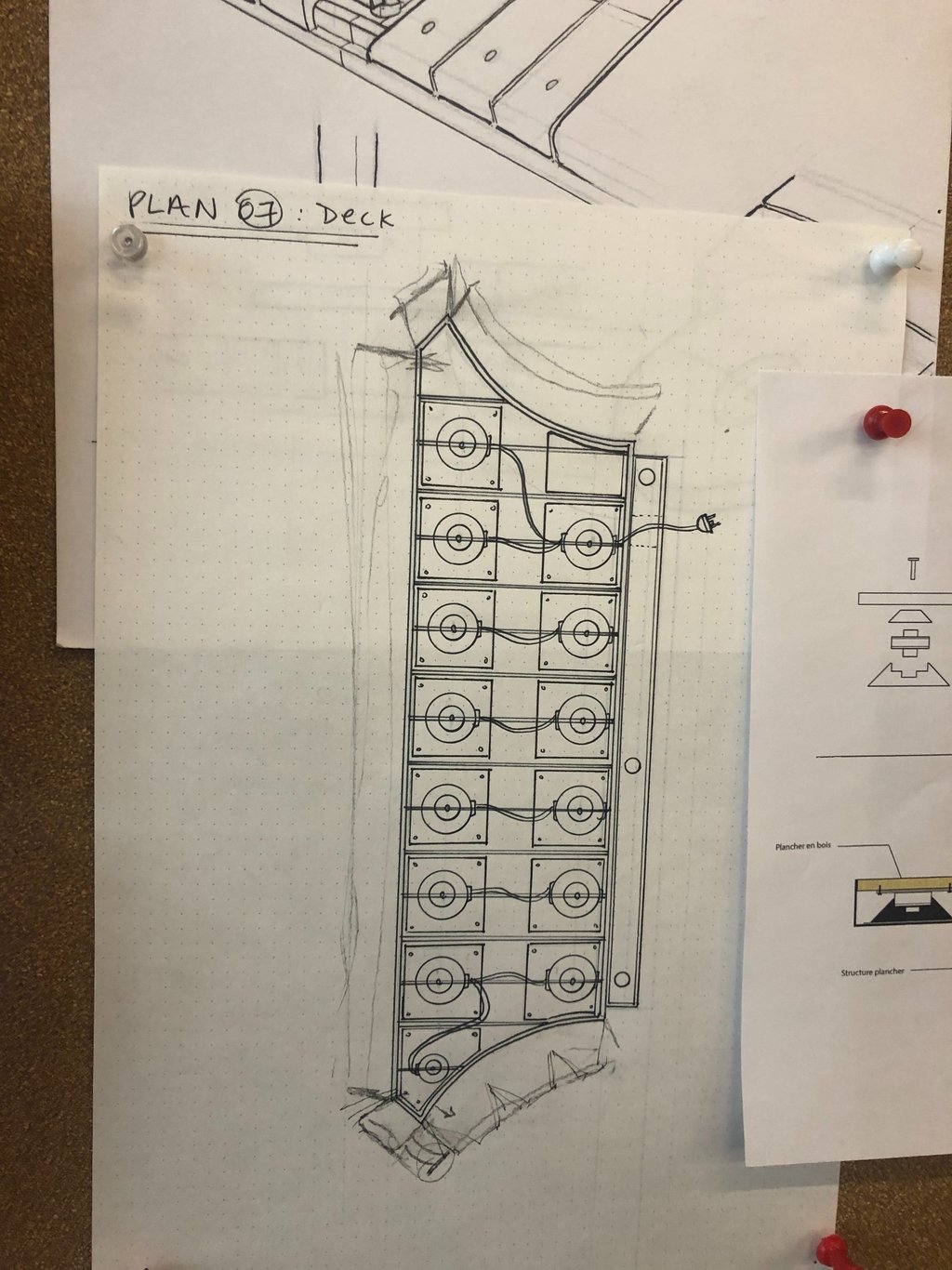
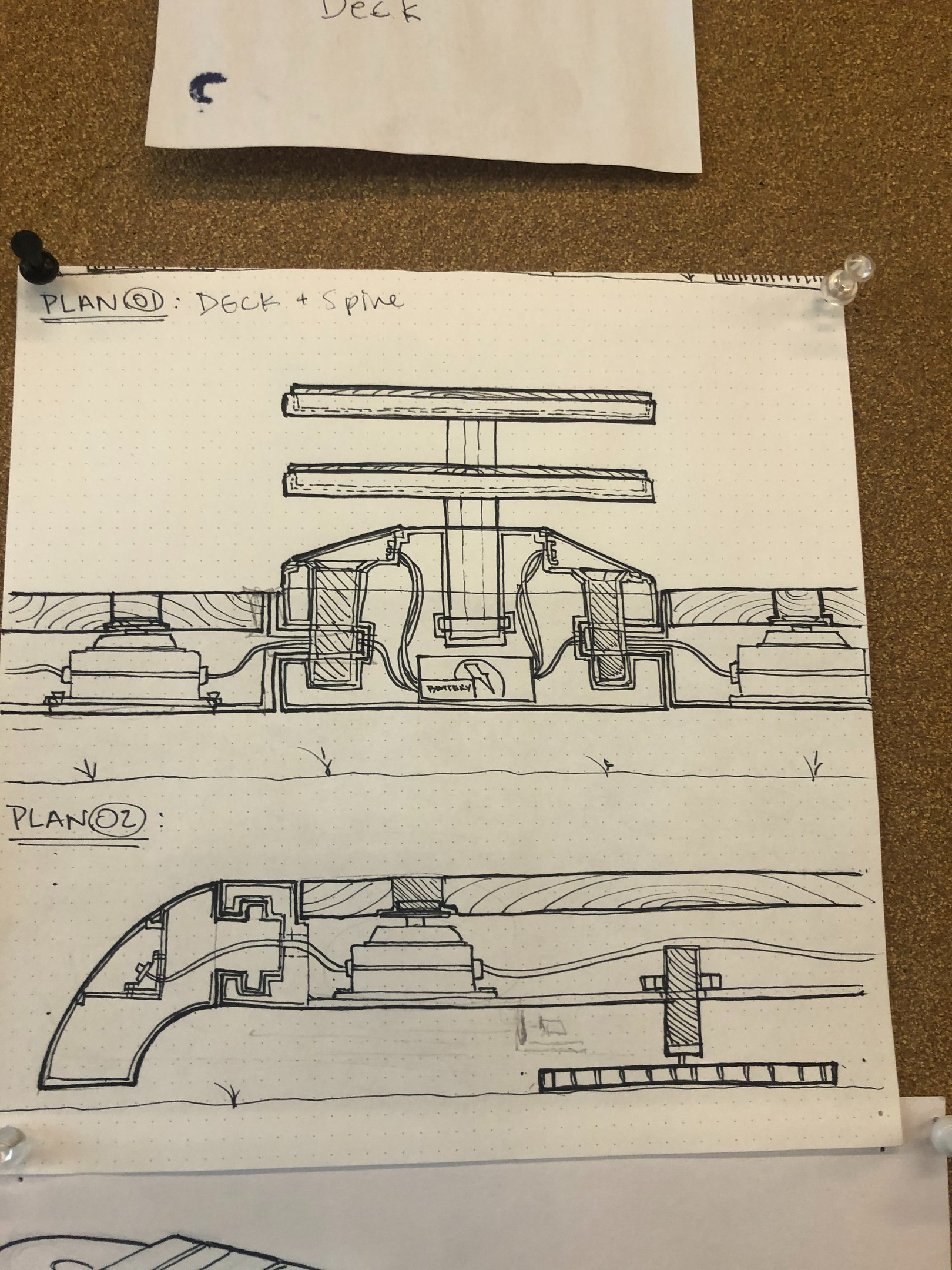
Energy autonomy was a hard constraint from the start. These sites have, for the most part, no infrastructure. How do you get light in a space with no electricity? You generate it. We combined three harvesting strategies: solar textile integrated into the overhead canopy, photovoltaic panels, embedded in the flooring, beneath a wood finish to preserve a natural look, and piezoelectric elements in the floor structure to capture kinetic energy from foot traffic. Each individual solution provided little energy, but once added up and stored, there was plenty of energy produced for our needs, and in such a way that made the infrastructure indifferent to seasonality and other factors.
Modularity
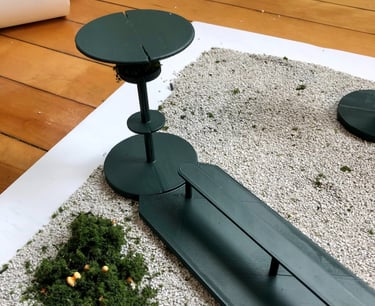
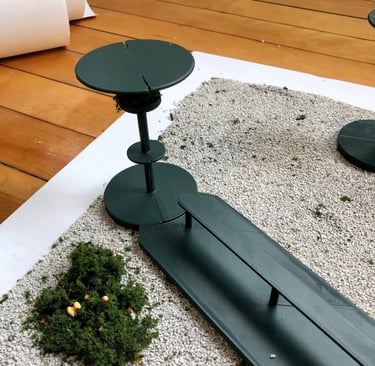
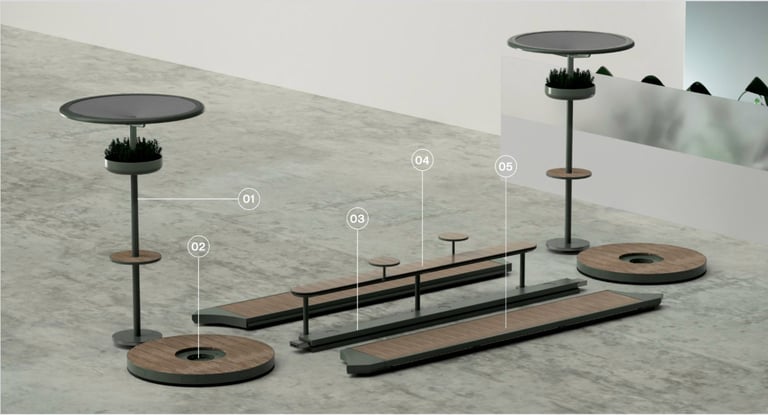
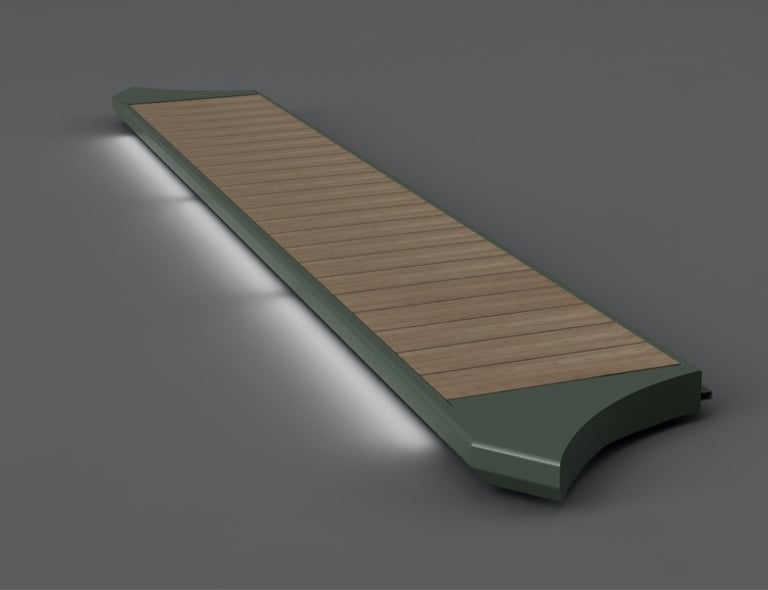
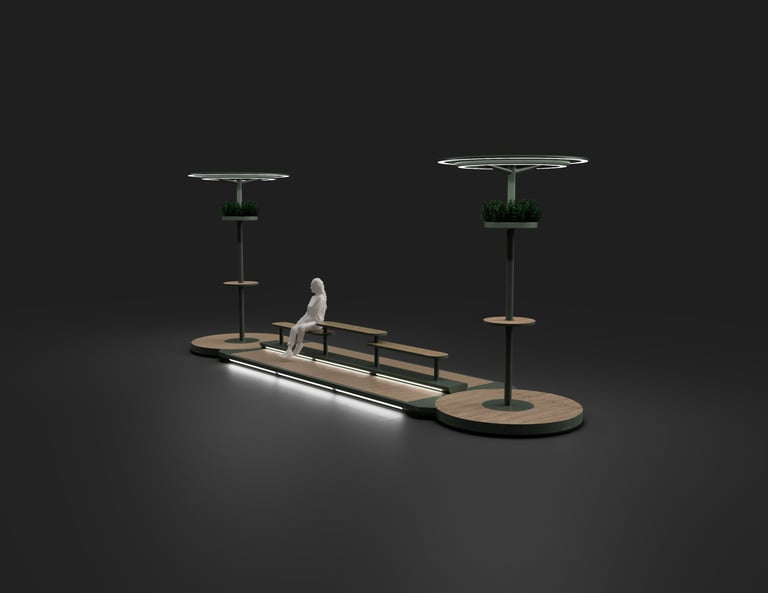
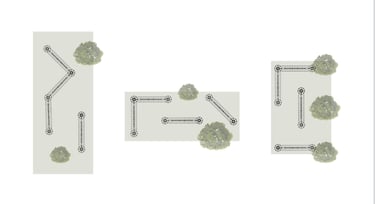
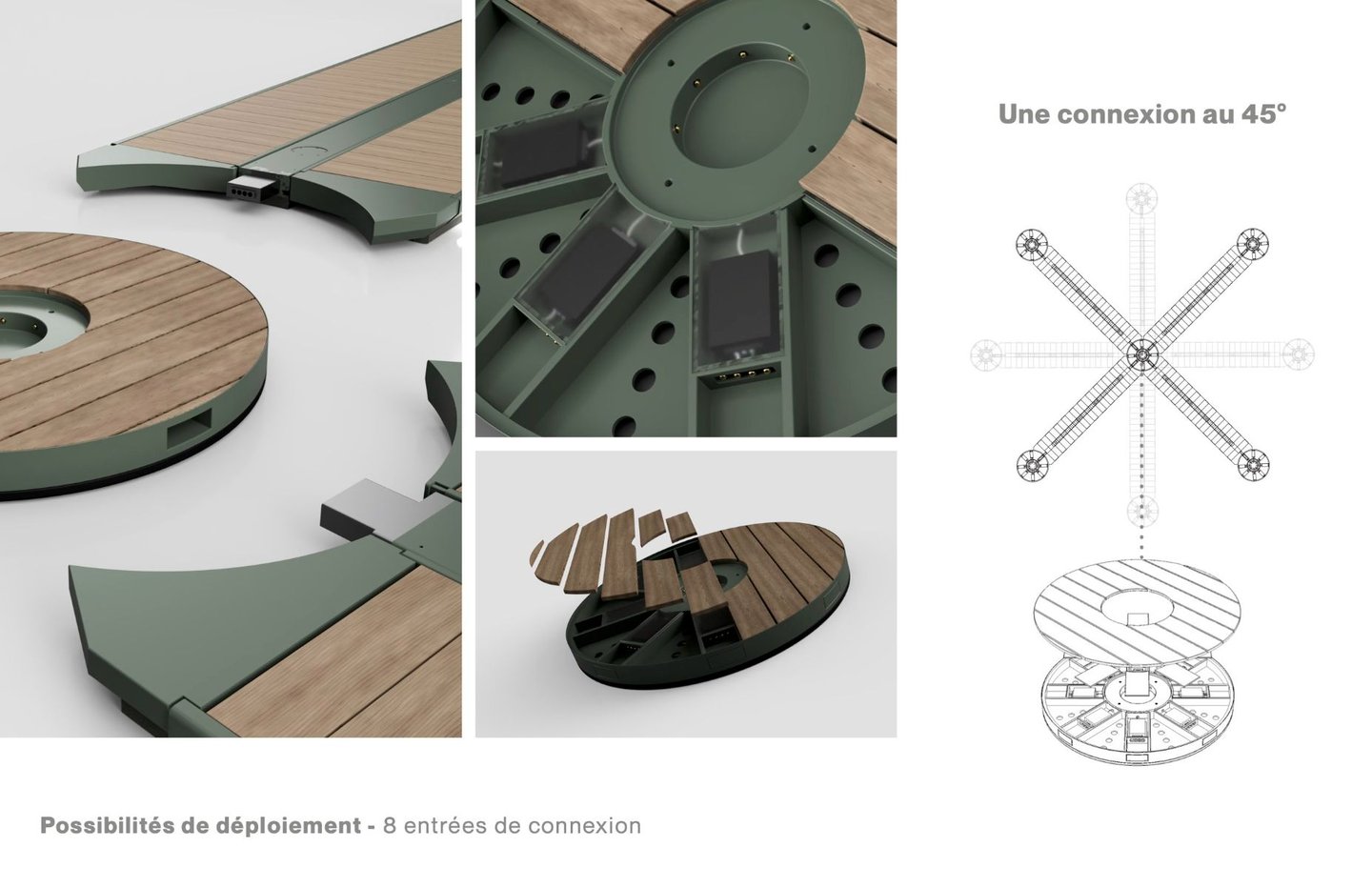
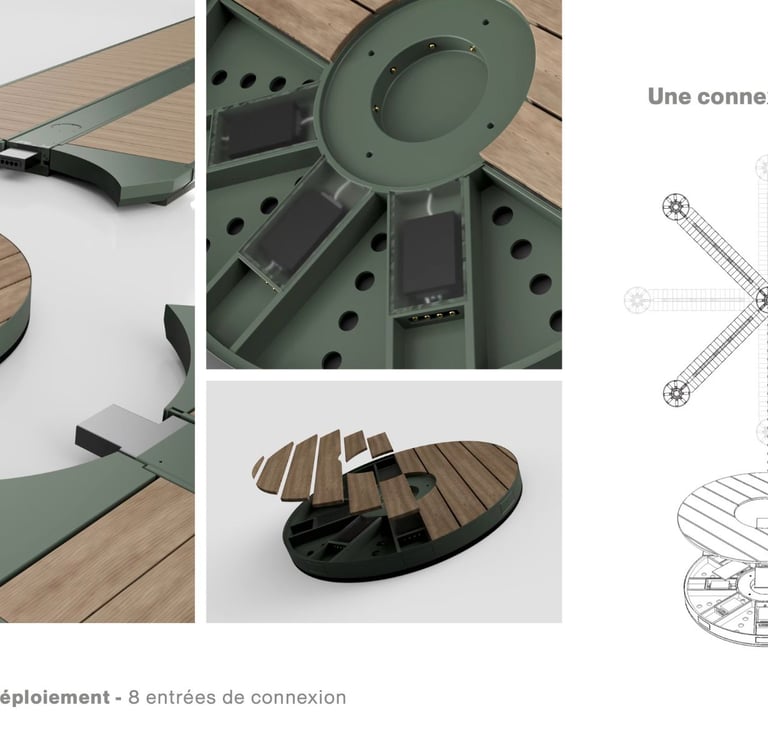
Another constraint was pivotal in our iteration process: layout. The targeted spaces range in size, shape, and usable area: from a small abandoned alley to a large field, and everything in between. We needed our solution to fill these various spaces comfortably, and give them the furnishing each needed. Hence, the system was conceived around five core components that connect through a central spine. Each module attaches at 45-degree increments, giving eight possible connection points per node. A single kit of parts can adapt to a narrow strip between buildings or a wide open corner lot. We tested multiple configurations using the dimensions of real vacant lots across Montreal as references.
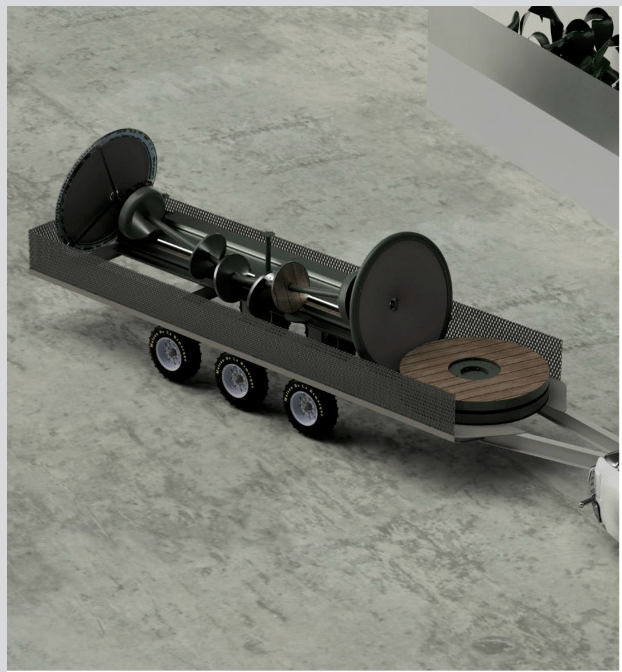
Modularity also solved a logistical challenge. These installations might last years, but may also only be present for a few months, so setup and teardown needed to be practical. The entire assembly was designed to fit on one of the city's standard medium-haul trailers.
02
Results
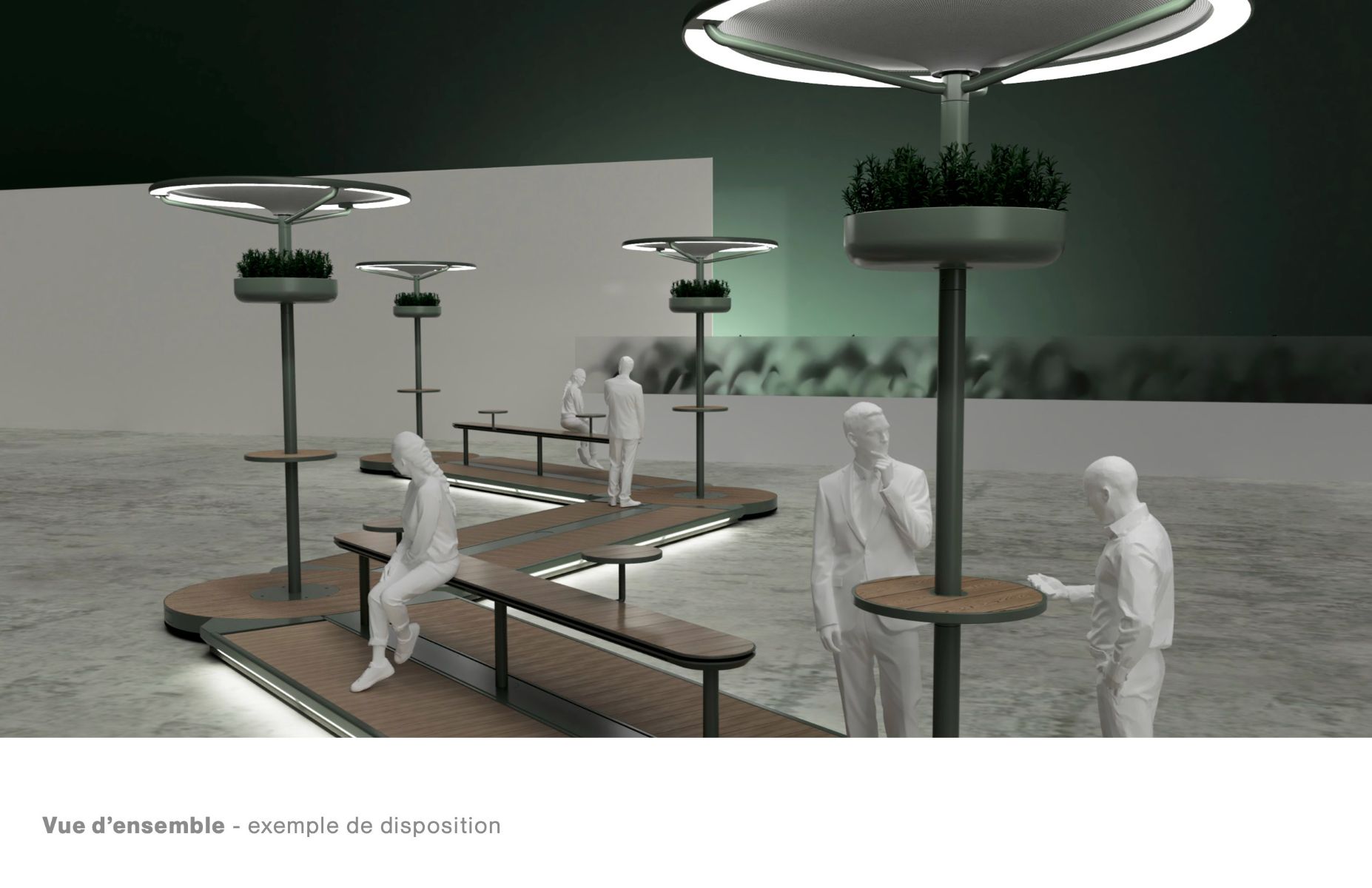
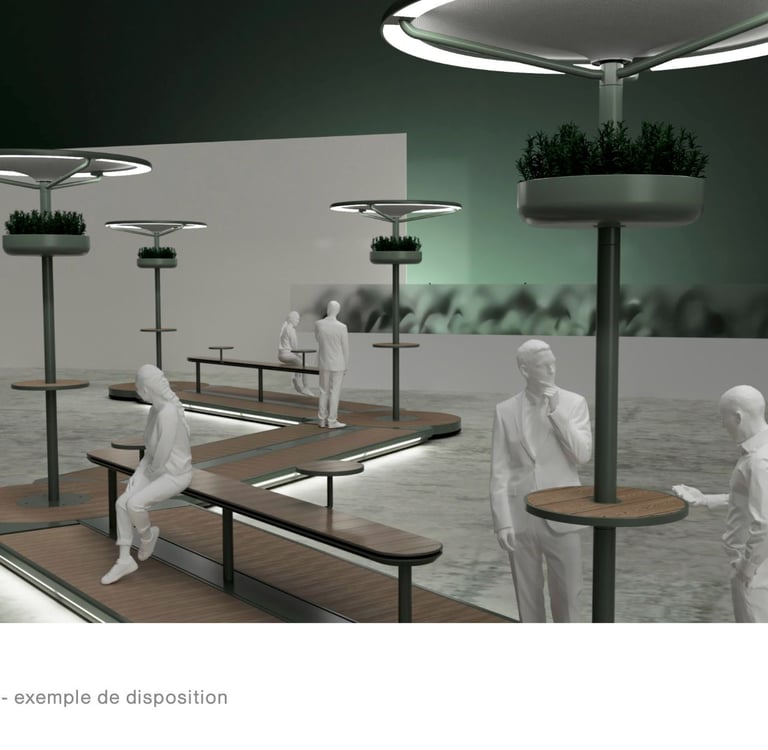
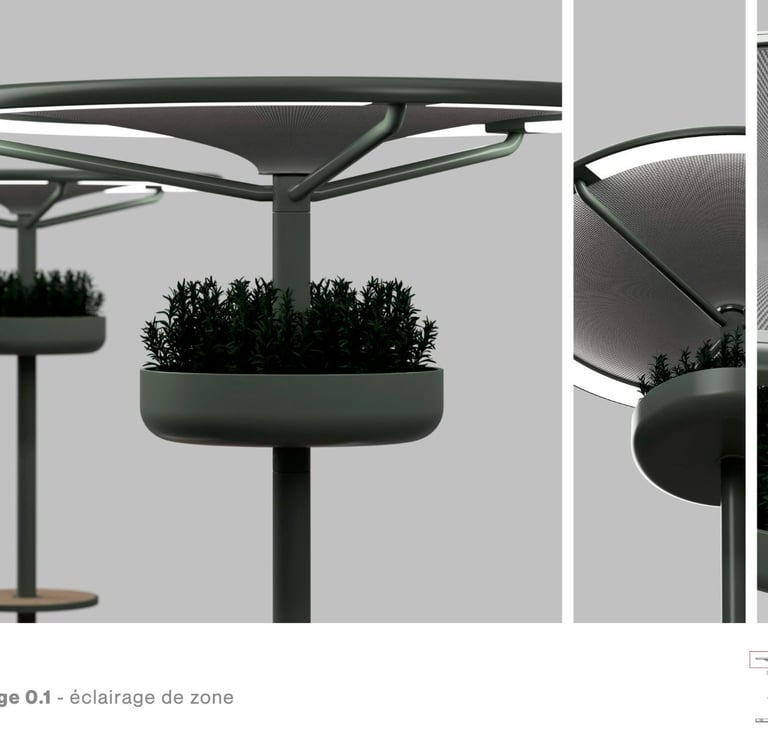
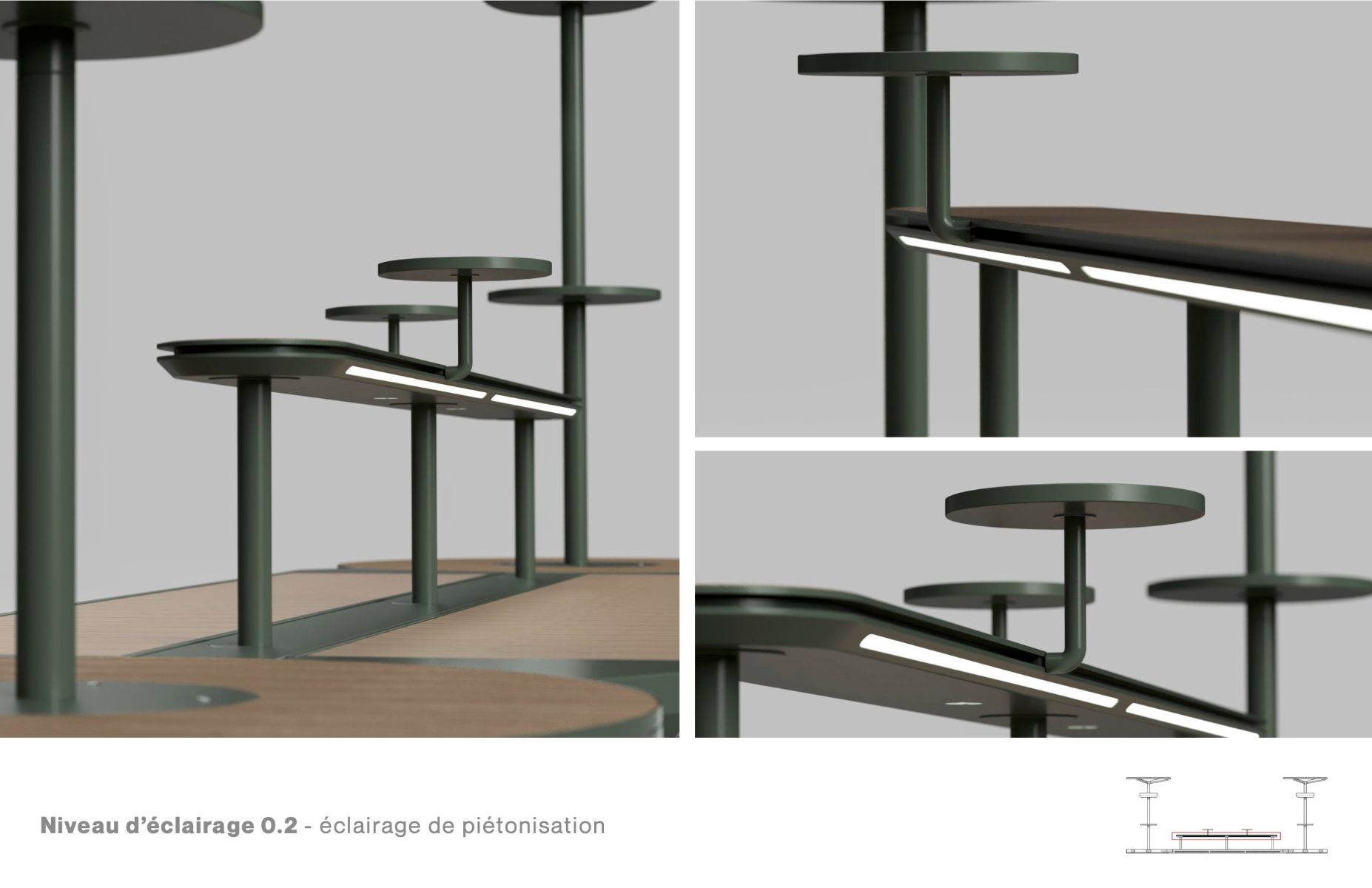
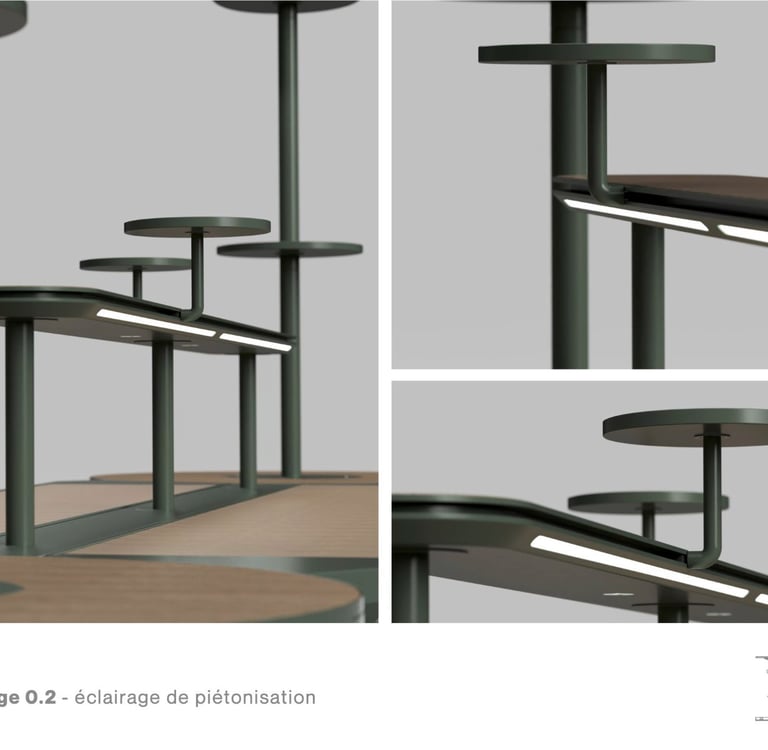
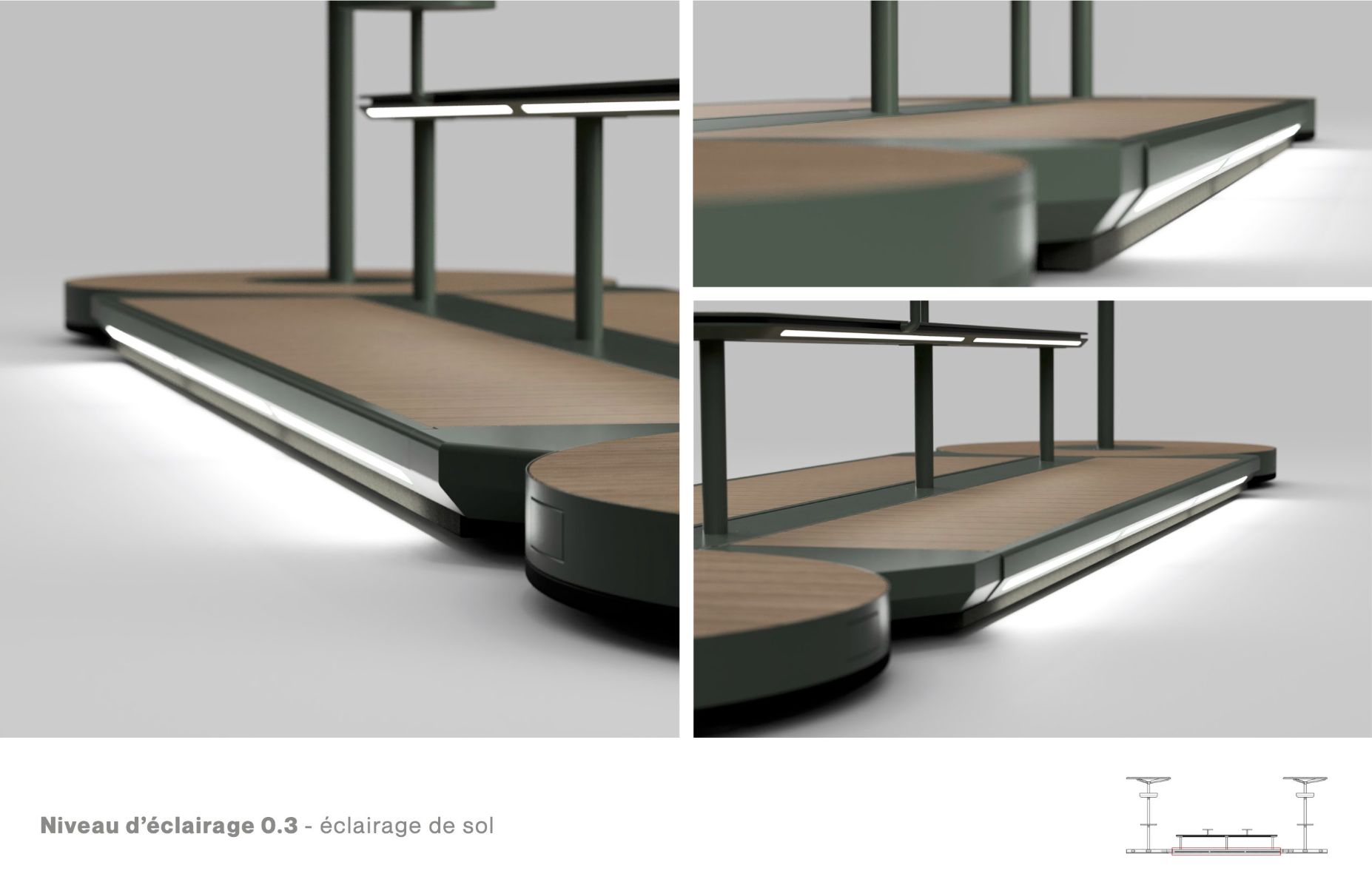
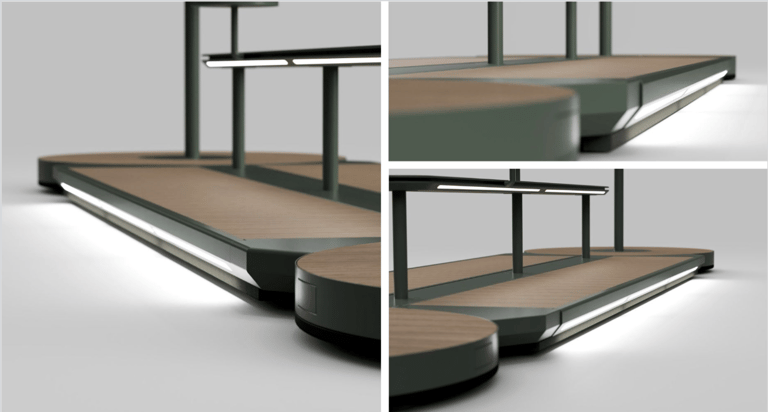
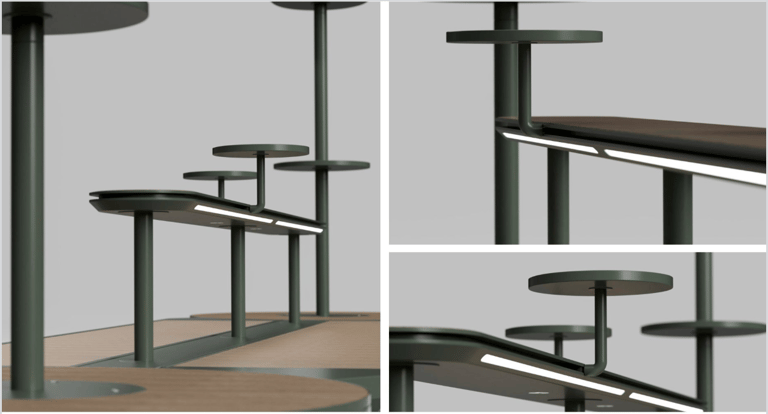
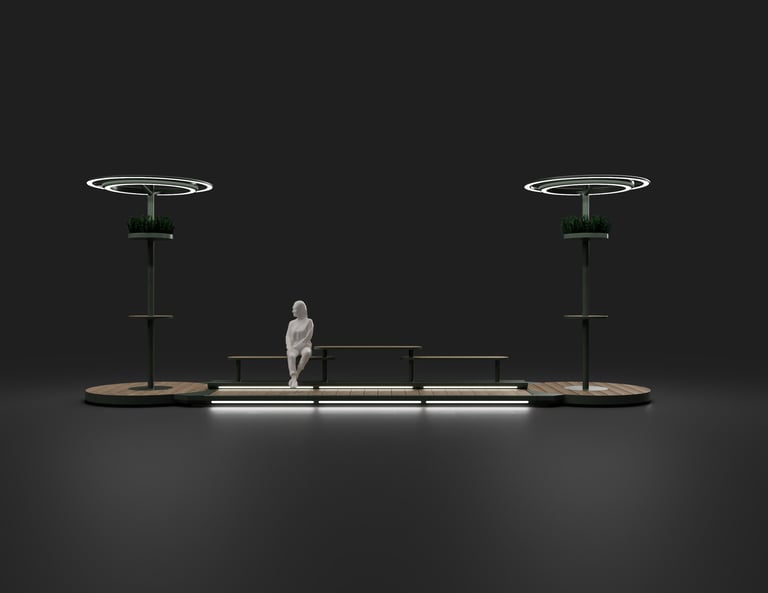
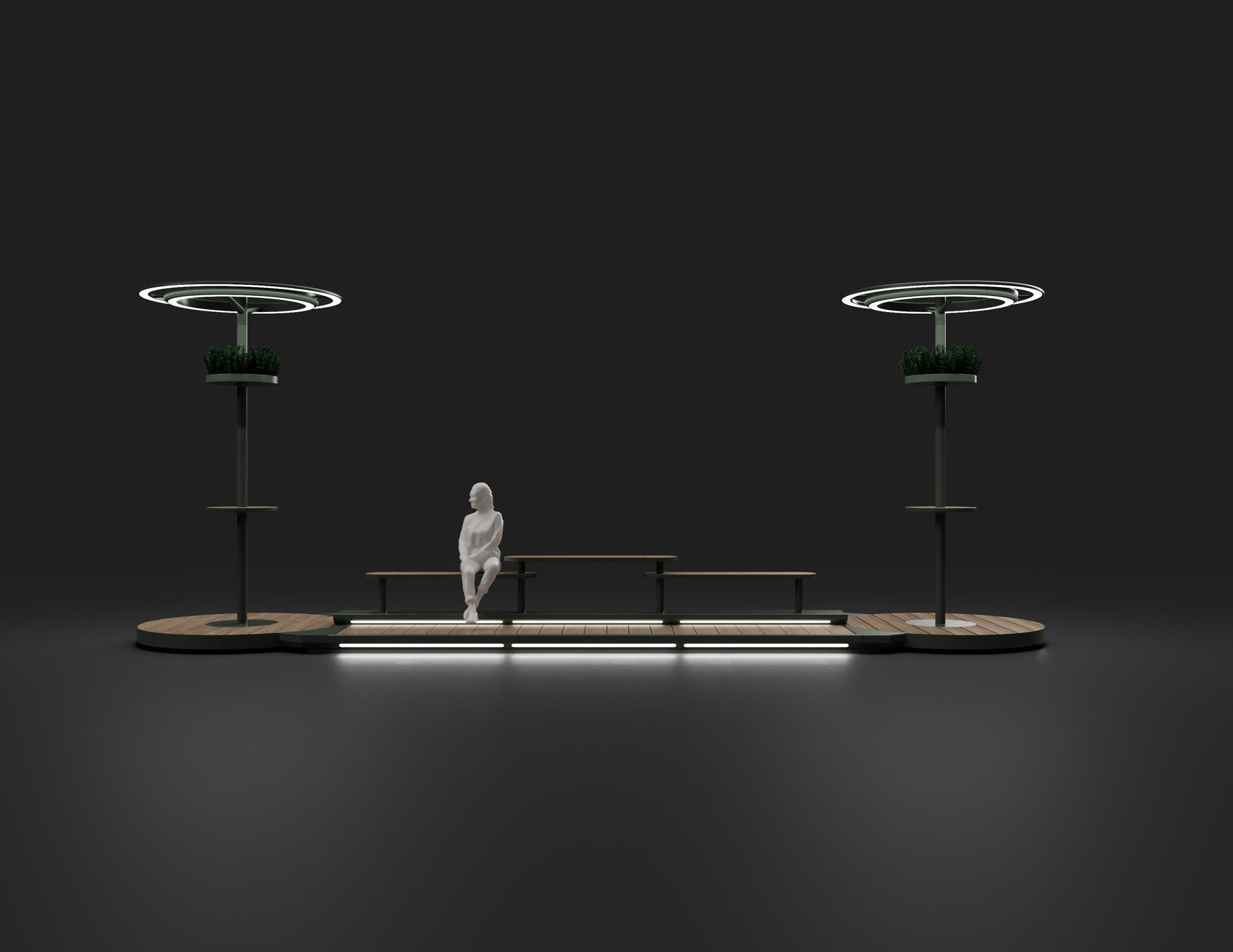
The lighting itself operates at three levels, each serving a different purpose. The canopy provides broad zone lighting, casting a warm ambient glow over the seating area, while also offering shade in summer and shelter from snow in winter. Mid-height lights along the bench structures illuminate at pedestrian scale, making the space feel safe and navigable. Ground-level lighting along the base modules marks edges and pathways, grounding the installation in its site. Together, the three layers create a sense of enclosure and warmth without walls.
The final deliverable was a fully engineered, production-ready concept. Materials sourced, energy systems calculated, modularity tested at scale through 3D-printed prototypes and full-size floor layouts. A turnkey proposal, ready for the city to pick up.